The $3 Brush vs. The $15 Brush: Deconstructing a Price Gap That Makes No Sense — Until You Look Inside
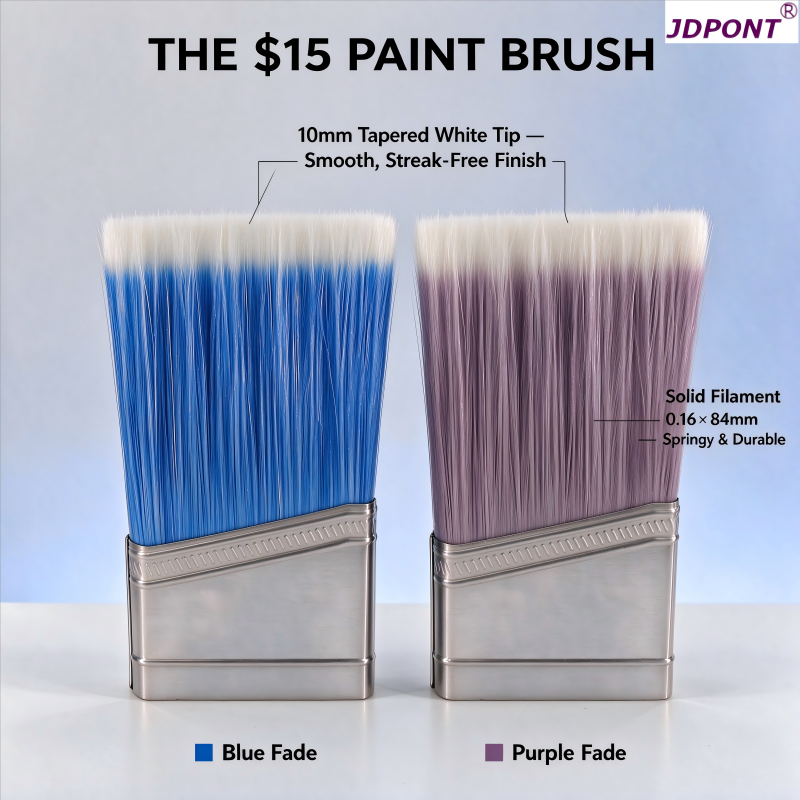
Two brushes sit side by side on the shelf. Same wooden handle, same metal ferrule, nearly the same shape.
One is $3, the other $15. A customer picks up both and thinks: that's a fivefold price difference for no reason.
It isn't. The difference is invisible from the outside — and it's why some tool brands quietly grow margins while
others race to the bottom.
1. The visible parts are nearly identical
Strip a brush down and most of what you see costs about the same either way: wood or plastic handle (mass-
produced), stamped steel ferrule, packaging and logo — all cheap, all easy to copy. A competitor can clone your
handle in two weeks.
The one thing they can't copy from a photo? What's inside the ferrule. The bristle.
2. Where the $15 brush actually spends its money
The $3 brush uses hollow-core filament (kinks, softens and sags, sheds after a few projects), flat-
cut uniform ends (drags paint, leaves ridges), loose density, and uneven strand length.
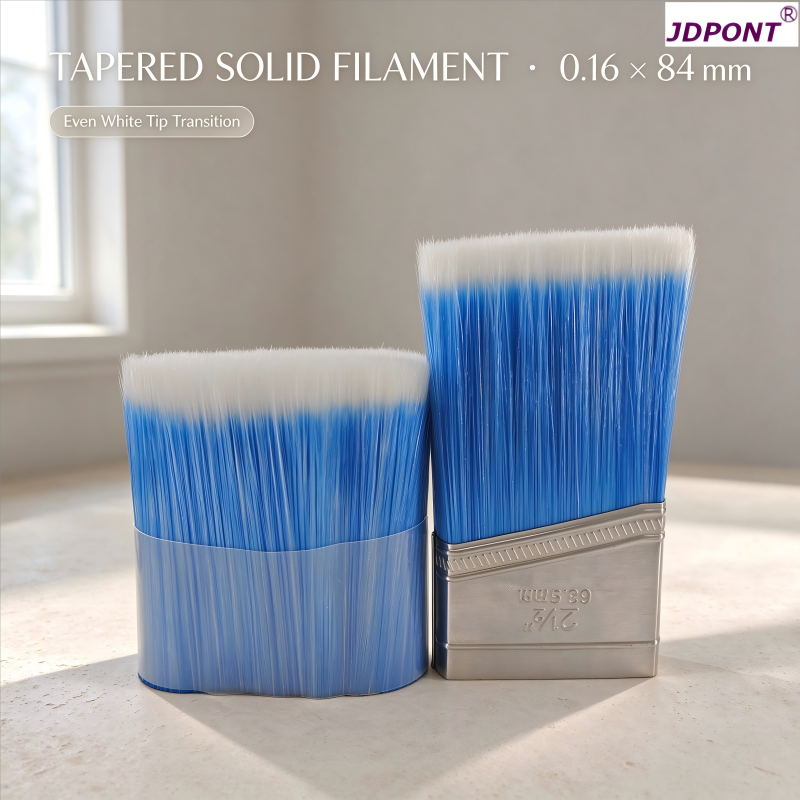
The $15 brush uses solid-core filament (dense, springy, survives dozens of washes), tapered fade-to-
white tips (cut clean, lay paint flat), high, even density, and precision-cut, uniform-length strands.
Customers don't read a spec sheet. They feel it on the first stroke: this doesn't drag. This doesn't shed.
This feels expensive. That feeling is what the extra money buys.
3. Why customers actually pay five times more
- Fewer mistakes: a cheap brush leaves streaks and hairs; fixing means repainting. The smooth brush
saves both paint and time.
- It lasts: a $3 brush dies after one room; a solid-tipped one lasts years — cheaper per project.
- First-stroke confidence: a tapered tip that flexes smoothly and a dense, balanced bundle feel "right"
in the hand.
- It wins reviews: phrases like "feels quality, no brush marks" all describe the filament — and sell the
next hundred units.
4. The brand play: reprice without redesigning
You don't need a new handle, mold, or package to move from a $3 commodity to a $15 considered purchase.
Change only what's inside the ferrule. The handle stays, the production line stays, the tooling stays — only
the filament gets denser, tapered, solid-core, with a refined fade-to-white tip.
Suddenly the same product feels different, performs differently, and earns a different price. The upgrade costs a
fraction of the margin it unlocks.
Build a tiered line: an entry brush for price, a mid-tier brush for performance, a premium one where the
tapered tip does the talking.
The premium tier anchors the whole line's perceived quality.
The takeaway
A price gap that looks arbitrary on the shelf is really a gap between hollow and solid, flat and tapered, disposable
and built to last. The handle is what customers see. The filament is what they pay for.
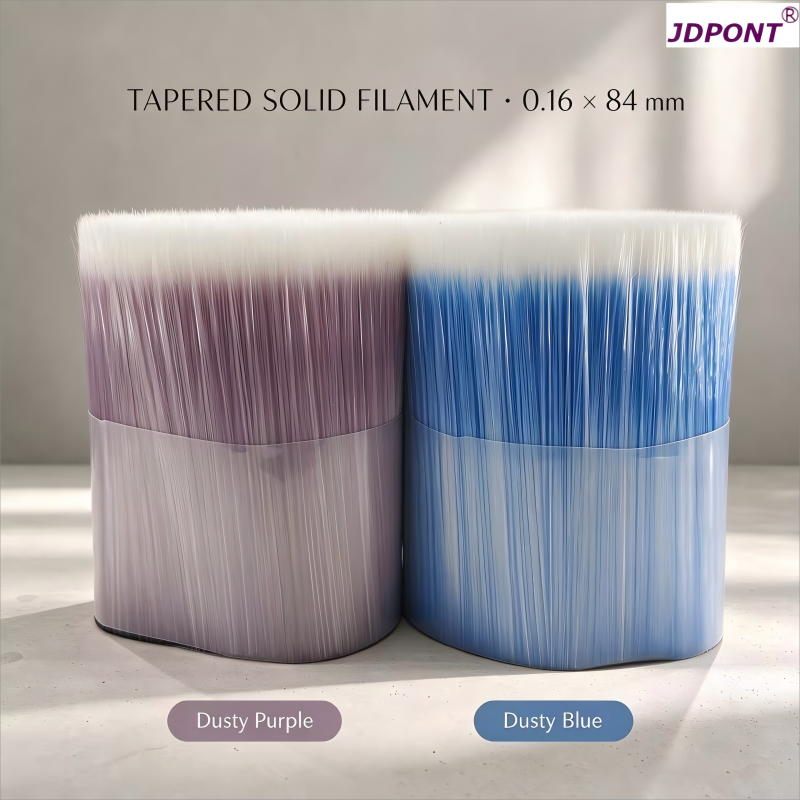
This product — a 0.16 × 84 mm tapered solid filament in Dusty Blue and Dusty Purple — is that internal upgrade:
dense, tapered, consistent, and engineered to be felt on the very first stroke.